Unknown's avatar

Apes and Bees

Apes and Bees

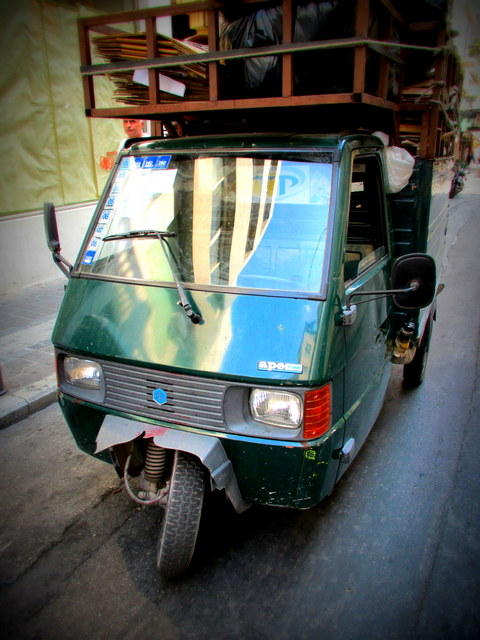
When Sue and I came to Europe on the Grand Tour in ‘72, these little 3-wheeled Piaggio Apes were ubiquitous in Italy and Greece. We had seen them nowhere else in Europe but they were clearly the go-to vehicle for plumbers, builders, craftsmen, and deliveries of all types in Italy. We assumed it was an Italian vehicle for Italians. But when we got to Greece we found exactly the same situation; a significant percentage of road traffic was comprised of these tiny, buzzy, flimsy contraptions. They have miniscule, single-cylinder 2-stroke engines that smoke like chimneys and propel the vehicle to a top speed of maybe 25 mph. And one look is all it takes to convince you Ralph Nader missed his target when he wrote Unsafe at Any Speed. My brother and his Navy pals on Crete referred to them as Souvlaki Wagons.

Fresh from university, after 4 years of Latin and 4 years of French, I looked at the swarms of these little rattletraps and wondered (to myself, mercifully), “Why do they call these things Apes? They want us to think they’re big and strong? That’s hilarious!” Obviously the laugh was on me for it was almost 4 decades later I suddenly realized that, of course, they hadn’t given the vehicle an English name, they gave it an Italian name, and that Ape is Italian (and Latin) for “bee.” And it’s a perfect name it: light, small, buzzy, and prone to travel in swarms.

These days, Apes are becoming as rare as apes in Greece but, because they apparently live forever, you do occasionally run into a hardy if superannuated soul piloting one these jobs around town. A toothless fishmonger in the next village sells fish from the back of a pungent example, and I spotted this one, apparently collecting recyclable trash, in central Athens.  They may be too slow for today’s roads and too uncomfortable for today’s Europeans but they were obviously well designed for their intended  purpose and era, which is rapidly drawing to a close.  My appreciation of the Ape ends there but whenever I see one it gives me fresh pause to consider just how much Greece has changed since 1972… and just how useful is a university education.

Unknown's avatar

Dimitris Arapis

We lost Sue’s great uncle last Thursday.  He was 99 years old.  Our family owes him a great personal debt of gratitude because it was he who repeatedly insisted that his son, who was stationed in NYC at the time, find his deceased uncle’s family in the US, and make contact.  With no help at all from us, Nikos was successful, and that led directly to our living in Greece half the year.  More importantly, it reunited Susan and Andrew with a part of their family previously thought to be as lost to us as the European relations of most American families tracing their roots to a forebear from the Old World.

It’s not possible to summarize a life in a blog post but ever since I first met Theo (uncle) Dimitri, I’ve marveled at the changes he saw during his life.  He was born in the deep Mani during WWI, in which Greece’s great historic enemy lost their empire.  As a child, his parents (his father was an Orthodox priest) relocated the family to Piraeus, the port of Athens.  As a pre-teen, he witnessed the sudden doubling or trebling of the population of Athens when 1.3 million christians  were forced out of Turkey by a “population exchange” treaty imposed by the League of Nations to stop the genocides in formerly Ottoman territory. (The treaty also required about 355,000 muslims to return to what had become Turkey.)  Theo Dimitri entered the Athens police force, and served as a policeman during the years of the Nazi occupation, when at least 40,000 Athenians died of starvation.  He and his wife raised five children, all of whom have survived him.  His wife died decades ago.

He was a fine head of the family, love guiding him in all things.  He was also a fine singer and he sang when he was happy, as at virtually every family gathering we attended.  During his homily, the priest at the funeral service said that whenever he heard that Theo Dimitri was back in the Mani, he would call to ask him to chant during Mass.  I made a video of Theo Dimitri singing what I call The Mani Song — simply a love-song to his homeland.  He was very proud of his Mani roots, and, beginning in the 50s, every summer he took his young family on a ferry (there was no road) to a then-abandoned seaside village in the deep Mani, not far from where he was born, from where he first went to school, and from where he rests today.  The ferry voyage took about 24 hours back then, having made stops at seemingly every bay and cove between Piraeus and Messinia. The family and all their supplies for the stay had to rowed ashore in the ship’s boats. Theo Dimitri  began by renting a house from an absentee landlord but eventually he bought the place for the family.  In doing so, it became the first re-inhabited house in the village.  Today all of the houses in the village are re-inhabited, at least in the summer.

Theo Dimitri loved to tell stories and he told us about walking across Mani at night with his father, about the unforgettable aroma of the fruit from one small area on the slopes above Porto Kayio, and about how he kept perishable food in Mani’s August heat without refrigeration or ice. Perhaps my favorite is the last I heard while he lived, relayed through his son.  When a person dies in Athens, the next of kin turn his identity card in to the police to obtain a death certificate.  The first line on the back of the Greek identity card, until it joined the EU, was religion.  The German looting of the countryside for food to feed their troops led to mass starvation in Athens, and identity cards were being turned in faster than they could be registered. So Theo Dimitri and some of his colleagues would pocket the occasional identity card and give it to a Jew trying to hide from the Nazis.  The recipient would have to open the lamination and move the photo from the old card to the new one but then he would have a very proper-looking identity card for a person of the Orthodox faith.  When Nikos told us this story he said it was the first time he’d heard it.

Go with God, Theo Dimitri.  We miss you already.

Unknown's avatar

Καραγκιόζης

Καραγκιόζης

Karagiozis is the popular name given to the Greek shadow puppet theater.  The protagonist in all of the plays written for this theater is a small, humble Greek peasant called Karagiozis and so the genre is simply known by his name. In this centuries-old type of theatre, the flat, articulated shadow puppets are pressed against the back of the screen by puppeteers hiding below it, and a light shining through from the back provides the magic for the audience out front. The “set” of the plays generally consists of the palatial house of the Turkish overlord on one side of the screen and the small shack of Karagiozis on the other. All of the action takes place between these two set elements, and if you think in terms of Punch and Judy you’ll have a good idea of the sort of action that occurs. There are something like 200 Karagiozis plays but the plot in all of them revolves around Karagiozis’s drive to put something over on the tall, regal Turk. Generally, a ridiculously small sum of money is involved – a fraction of a cent – but for Karagiozis the important point is that he comes out ahead of the Turk. This drives the action through all of its absurd twists and turns, and, of course, Karagiozis always comes out ahead.

Karagiozis is considered a national treasure – an elemental part of Greek cultural heritage – and so the state supports a couple of puppeteers who travel the country each summer, staging shows for holiday-making Greeks. Each year, one of these troupes arrives in Sikya and sets up its theatre-in-a-trailer in the plateia just beyond our balcony. The puppeteers spend the day setting up benches, screening, a popcorn machine, a souvenir booth, and then circulating through the surrounding villages and towns in a loudspeaker-equipped car, drumming up business. The show starts after dark, and it is always SRO, packed to capacity. I thought of going the first year but quickly determined that only kids and the parents of kids too young to be left alone were in attendance. The other parents sit outside in the plateia and dutifully buy snacks for the kids before the show and souvenirs after.  The next morning, its all been packed up and taken away to the next village.

The Karagiozis arrived in Sikya this year on Tuesday, and the howls of laughter and shrieks of delight that erupted from the compound proved that the puppeteers still know their audience and that the audience still appreciates the efforts of Karagiozis to prove himself the better man. In a movie-, TV-, and video game-jaded world, it’s just wonderful to see kids enraptured by shows that have traveled the countryside since long before the arrival of automobiles and electricity, long before independence.

My appreciation for the Karagiozis is due entirely to a wonderful section of Henry Miller’s The Colossus of Maroussi. Miller was a true hellenophile, and his ability to communicate the wonder of this land is an inspiration for this blog.

It’s good to be just plain happy; it’s a little better to know that you’re happy; but to understand that you’re happy and to know why and how . . . and still be happy, be happy in the being and the knowing, well that is beyond happiness, that is bliss.

– Henry Miller, The Colossus of Maroussi

Unknown's avatar

The Blue Flag

The Blue Flag

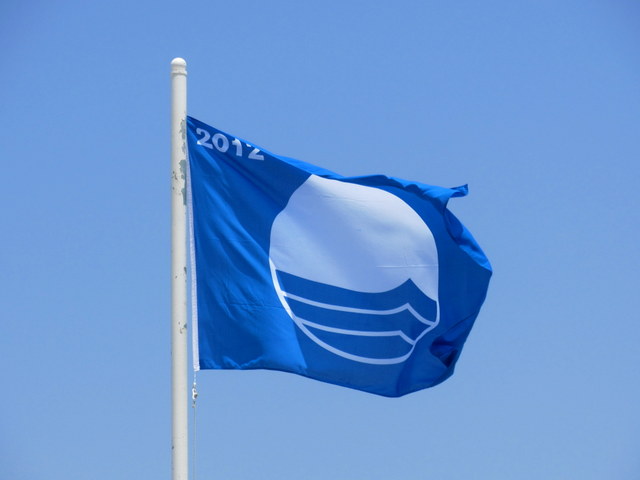
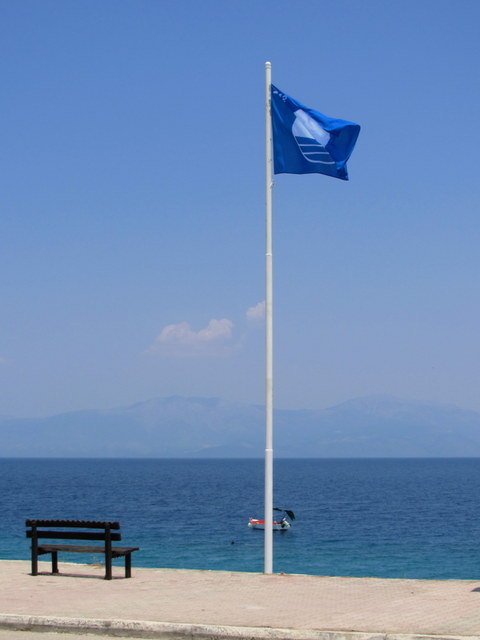
Every year, a group called the Foundation for Environmental Education awards “Blue Flag” status to the cleanest beaches in Europe and beyond. Each year since we’ve been here, the beach at Sikya has enjoyed Blue Flag status — until last year. We don’t know the issue but this beach and our neighboring beach in Melissi didn’t make the list. We were happy to see that both beaches were reinstated this year. The award status runs from July 1 to June 30, and on Thursday the flag was hoisted again over the beach. Had this been our first year here, we might have wondered why the responsible official waited until the 5th to raise the flag. With the benefit of 5 years experience, however, we just laughed.


Unknown's avatar

Sunset all over again

Sunset all over again

That fuzzy sunset photo a couple of posts ago bugged me enough to (download and then) read the camera manual. Turns out, the problem was I had the “Servo AF” box checked. Go figure.

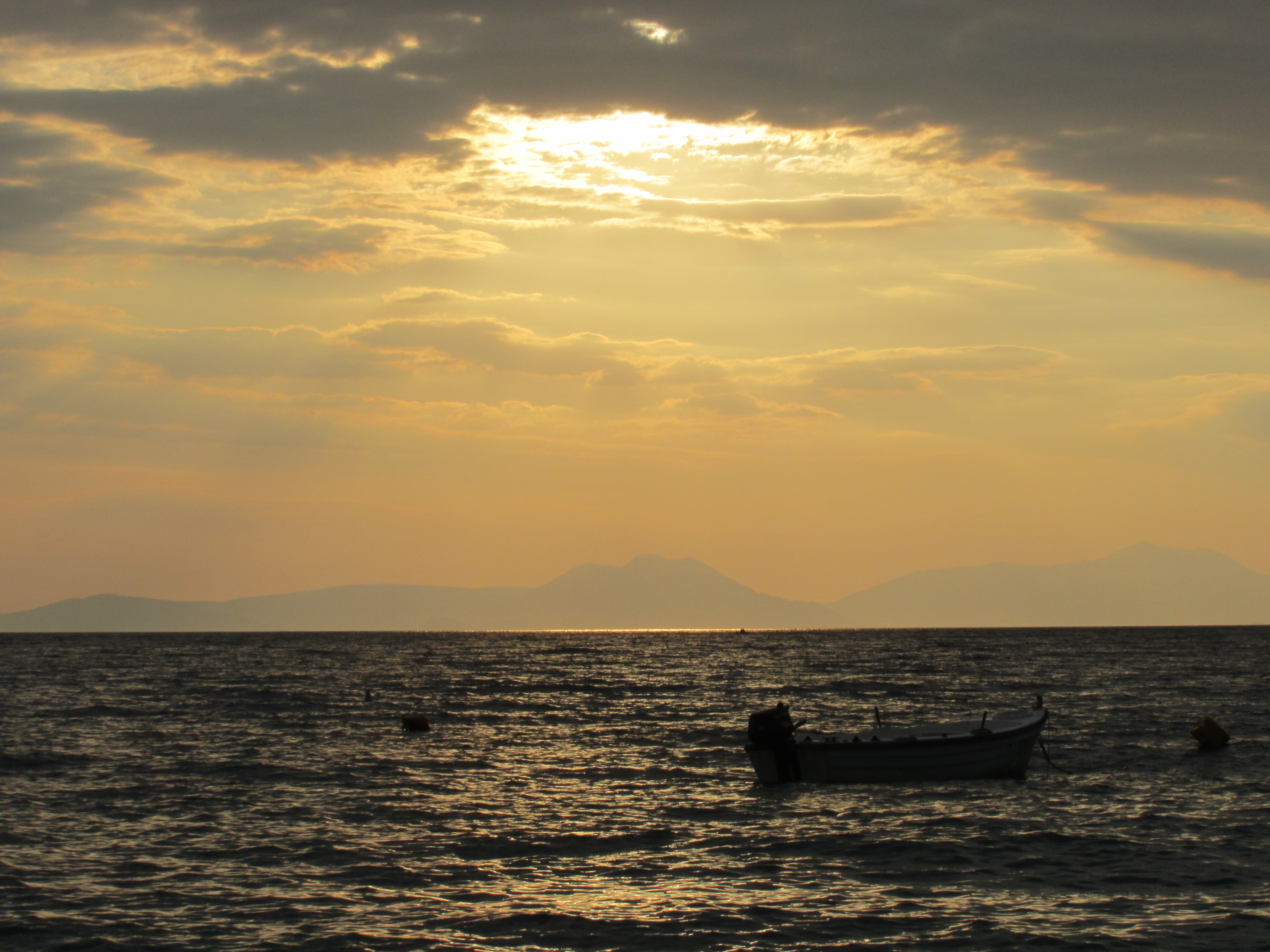
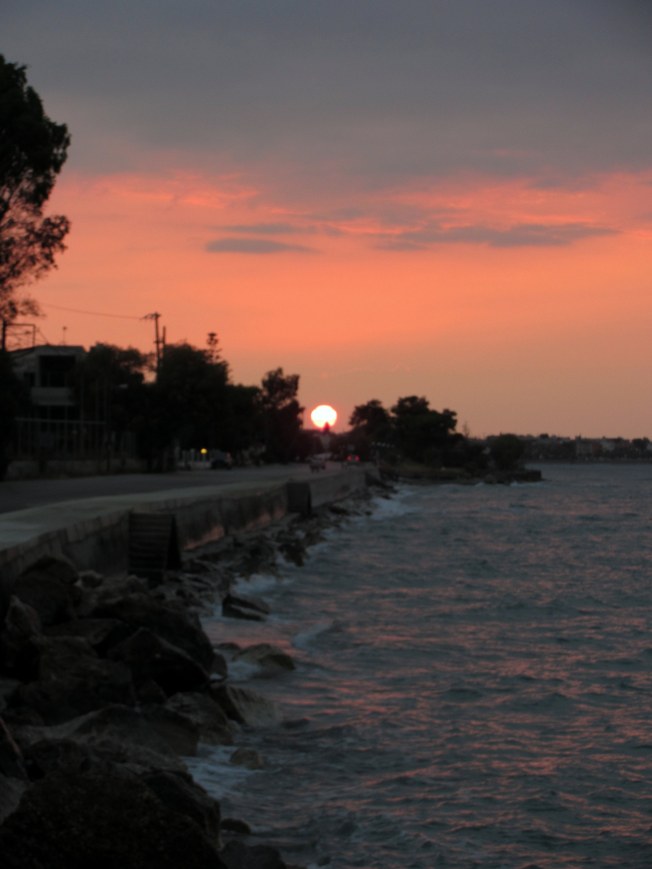
Anyhow, I was on my way home from Melissi again last night when Hλιος (Helios, the sun god of ancient Greek mythology and the modern Greek word for sun) was standing on the horizon posing for his photo before retiring for the night. I went down on the beach at the Akrotiri taverna and grabbed these snaps of the Sikya cape.

Unknown's avatar

So this is how sunrise looks…

So this is how sunrise looks...

Woke up early this AM and went to the beach to grab a few snaps. The clouds from last evening stuck around overnight so the view was pretty amazing.

I didn’t change the colors in post-processing.  The variance is a result of locking the exposure to different areas within the frame.

All-in-all, a pretty rewarding trip to the beach.  Maybe I’ll get up indecently early again someday…

Unknown's avatar

Sikya Sunset

Sikya Sunset

Sorry about the soft focus — the camera was having a moment — but I thought the colors were nice. We had some clouds this afternoon so the sunset was colorful and I just happened to be coming back home from Melissi when the sun was resting on the horizon.

Unknown's avatar

Fire

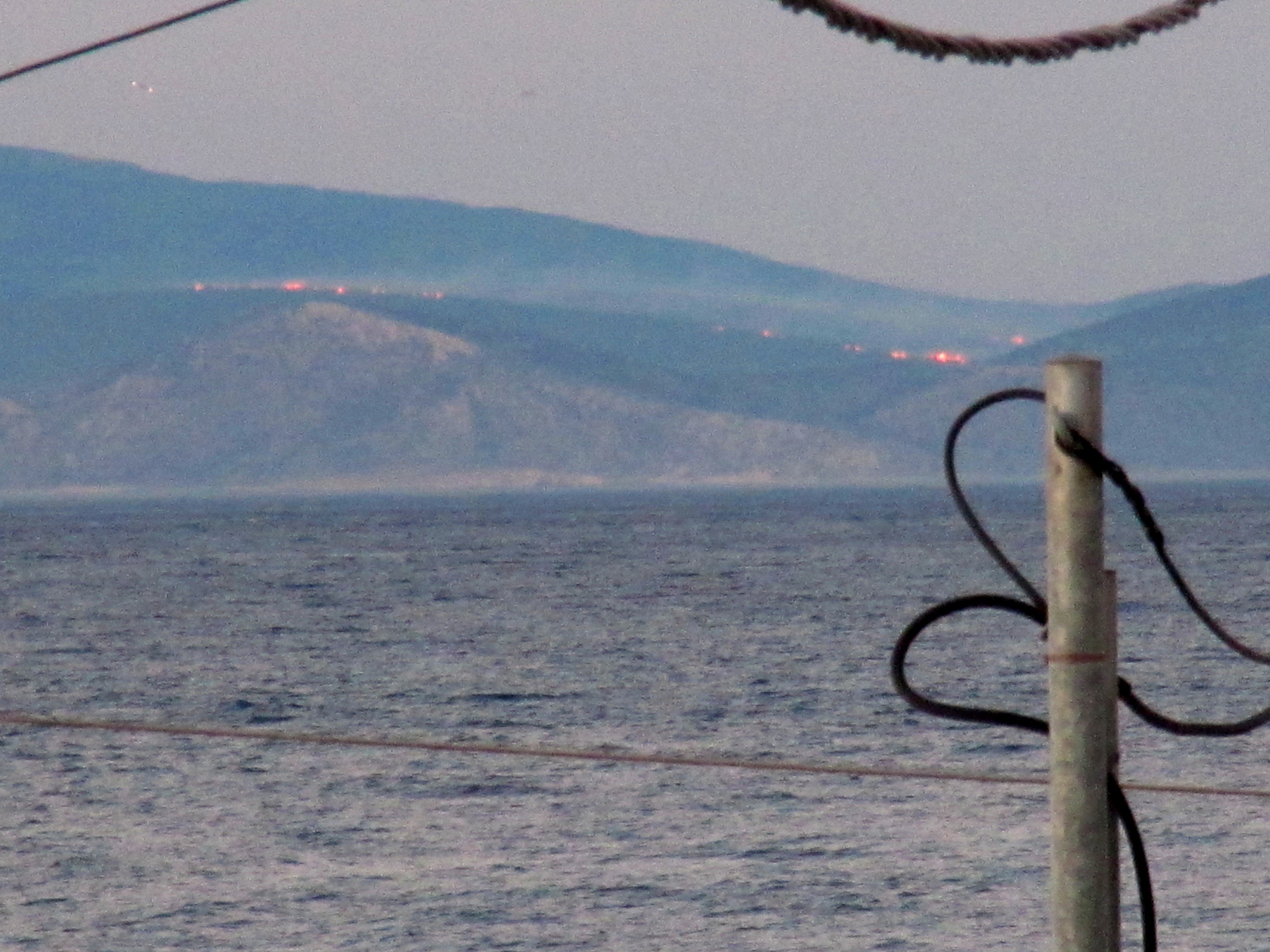
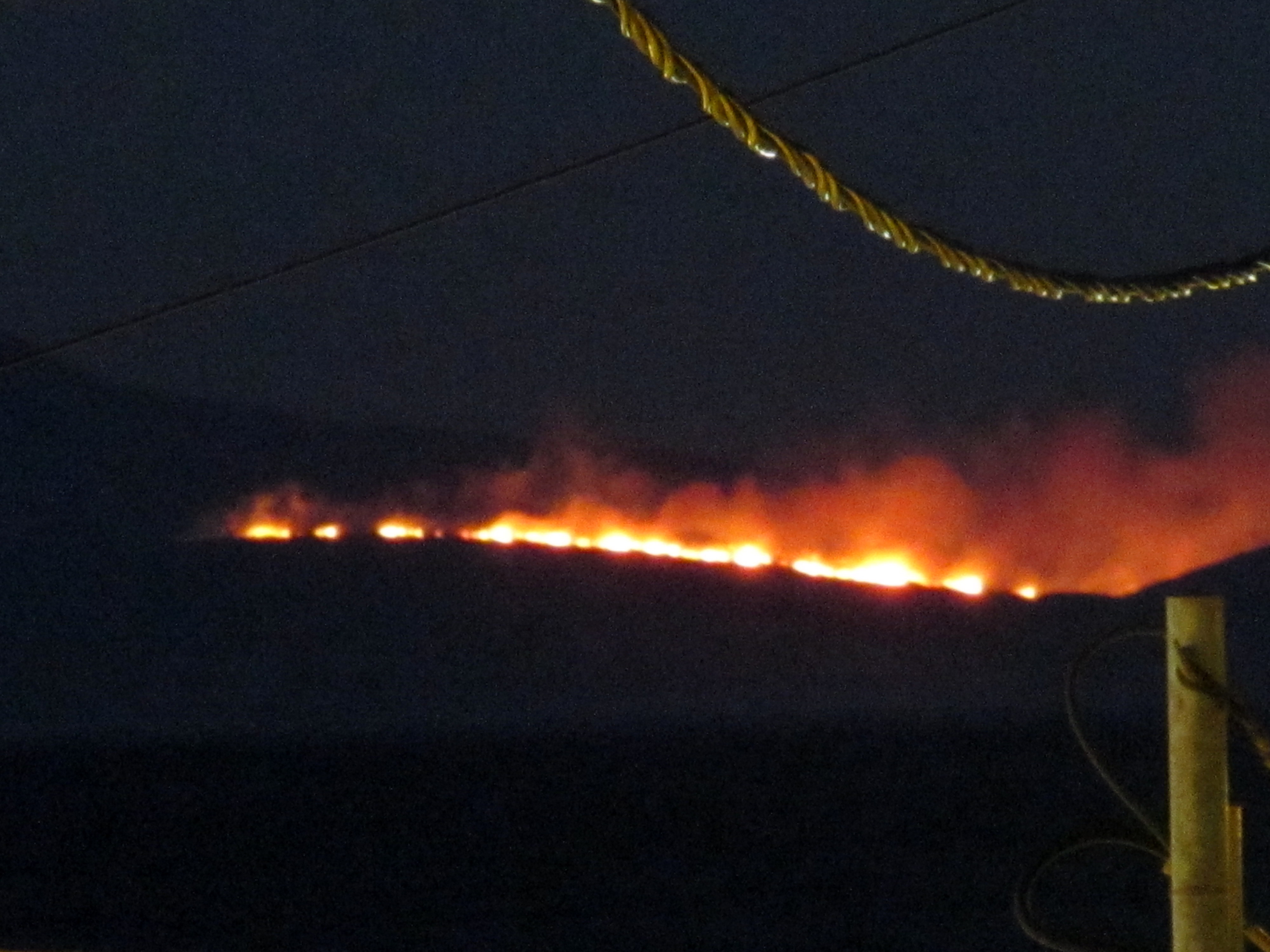
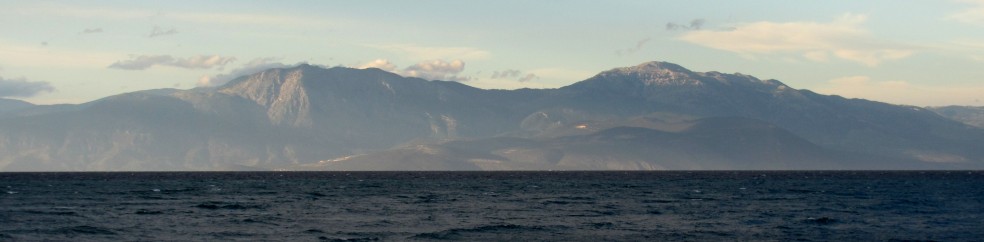
When I went out to the balcony to watch the sunset yesterday there was a plume of smoke in the mountains across the Gulf. I went down to the beach to take a couple of photos. It was obvious a significant west wind was blowing across the fire, pushing the column of smoke sideways toward Athens.  When I got back to the balcony the sun had set and in the shadows I could see flames with the naked eye.  As the sky darkened, the flames advanced and joined, forming what looked from the south to be a wall of fire.   The camera lost its ability to focus in the dark but as midnight approached, the fire seemed to break apart again, presumably having burnt itself out.

In that first thumbnail taken from the balcony, you can see what I think is a fire plane, wheeling away after a water drop.  I think the planes stopped flying at dark — at least I didn’t see any signs of aircraft after that.

The first two balcony shots were taken at 30x, well into the digital zoom range, presumably with the ISO pushed to max, so they’re really grainy and noisy.

This morning, from the water, I could see the area smoldering but it was clear the fire was out.  I saw nothing about it in the news websites.  I don’t think there is a village in the affected area.

As in the American west, wild fires are simply a part of summer in southern Greece.  The hot winds known as Meltimi winds blow down out of the Balkan peninsula, and spring’s wildflowers and greenery, having long since turned to kindling by cloudless, scorching weather, combust with the least encouragement.  The absence of trees here makes the fires relatively less intense; the flames consume the available fuel quickly.  Still, this seems to me very early for the number of fires I’m seeing reported.  This is something I normally associate with August, so I’m afraid we could be in for a bad fire season.