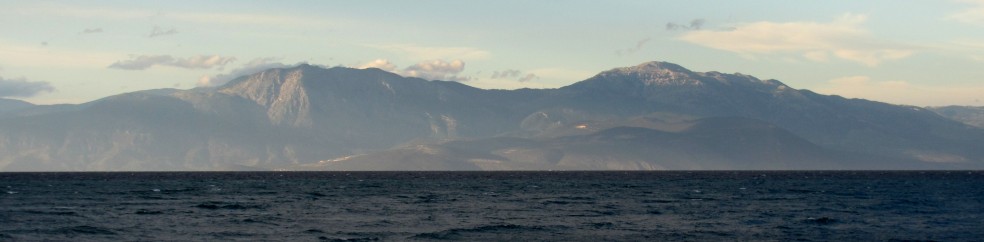

We had a few days to visit the Mani peninsula, the middle finger of the three main peninsulas of the Peloponnese. We had great weather for our visit, and an almost-full moon. We spent most of our time visiting with a friend, and mostly confined our roaming to the area around Areopolis, Oytilo, and Limeni.
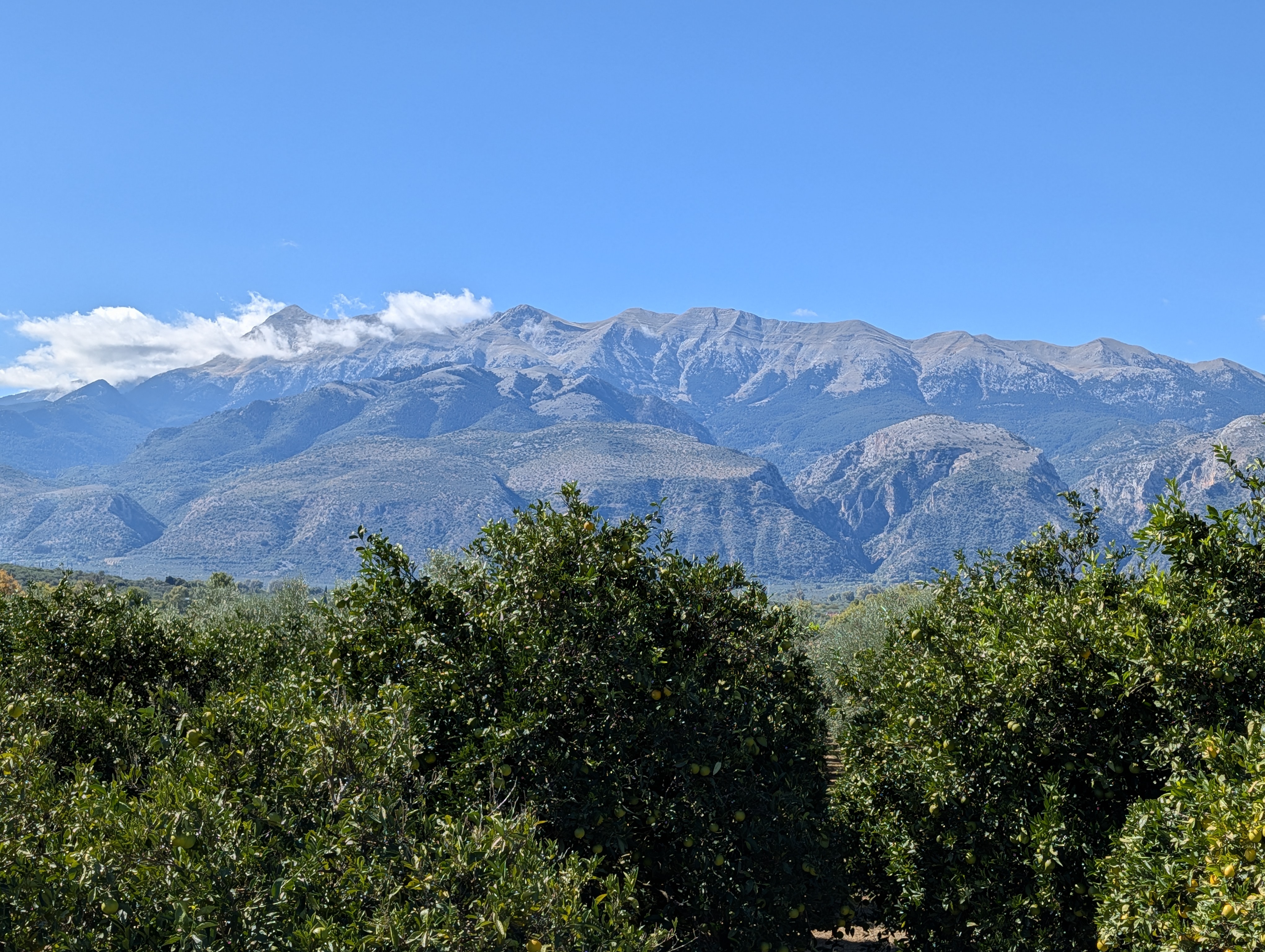
Traveling south from Sparta, this view of the Taygetos mountains is a highlight for me. This formidable range protected the people of Mani throughout history.
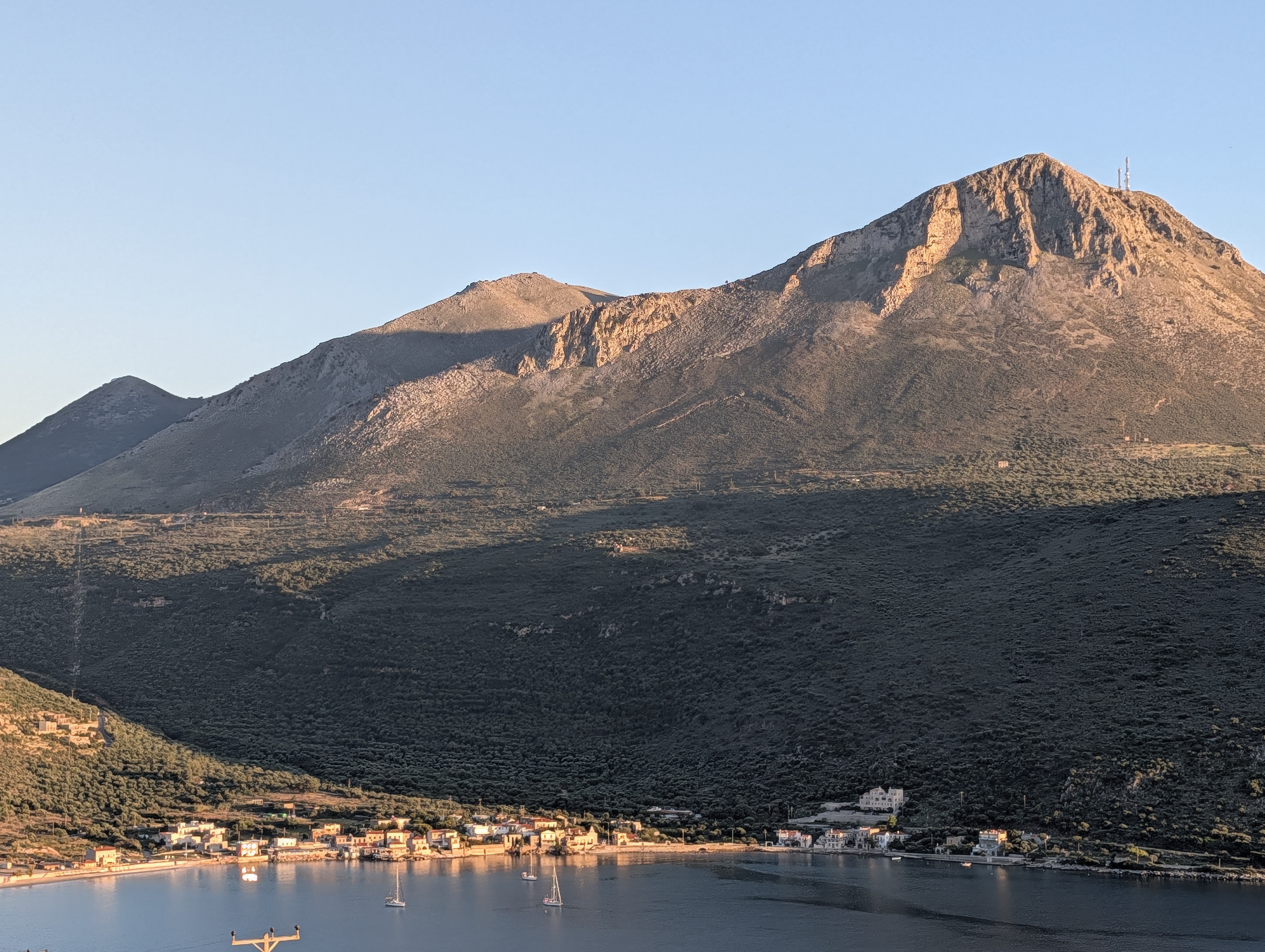
This 2500 ft peak is my landmark for the entrance to the inner Mani. It is called Prophet Ilias. I have many photos of it, and you’ll see more than one here.
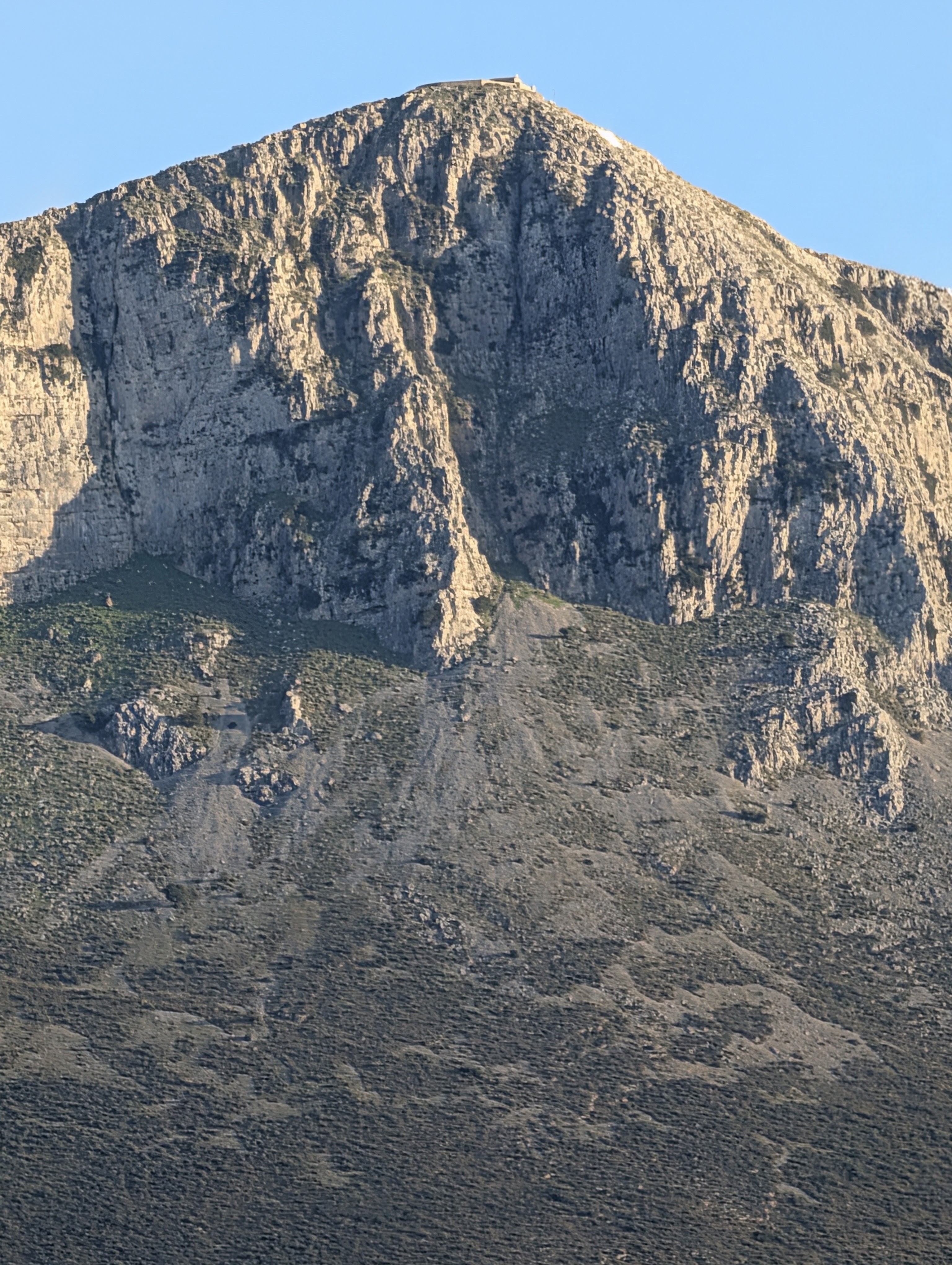
The summit of Prophet Ilias. There is a small church on the top, and people walk up to it on the prophet’s feast day.
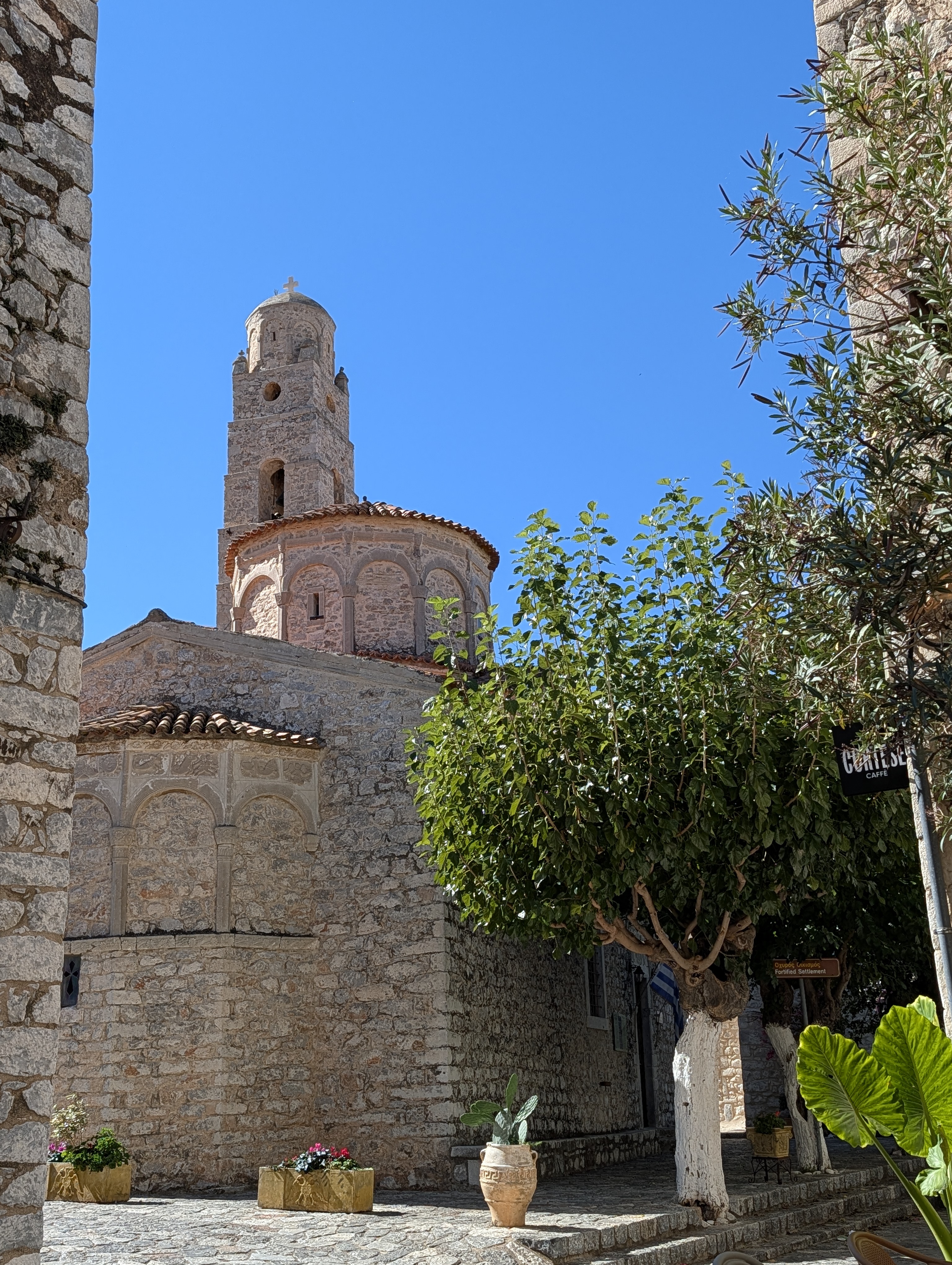
Prophet Ilias rises over Areopolis, the de-facto “capital” of the deep Mani. This church, Archangels, in the center of Areopolis, is where the Greek war of independence began on March 17, 1821.
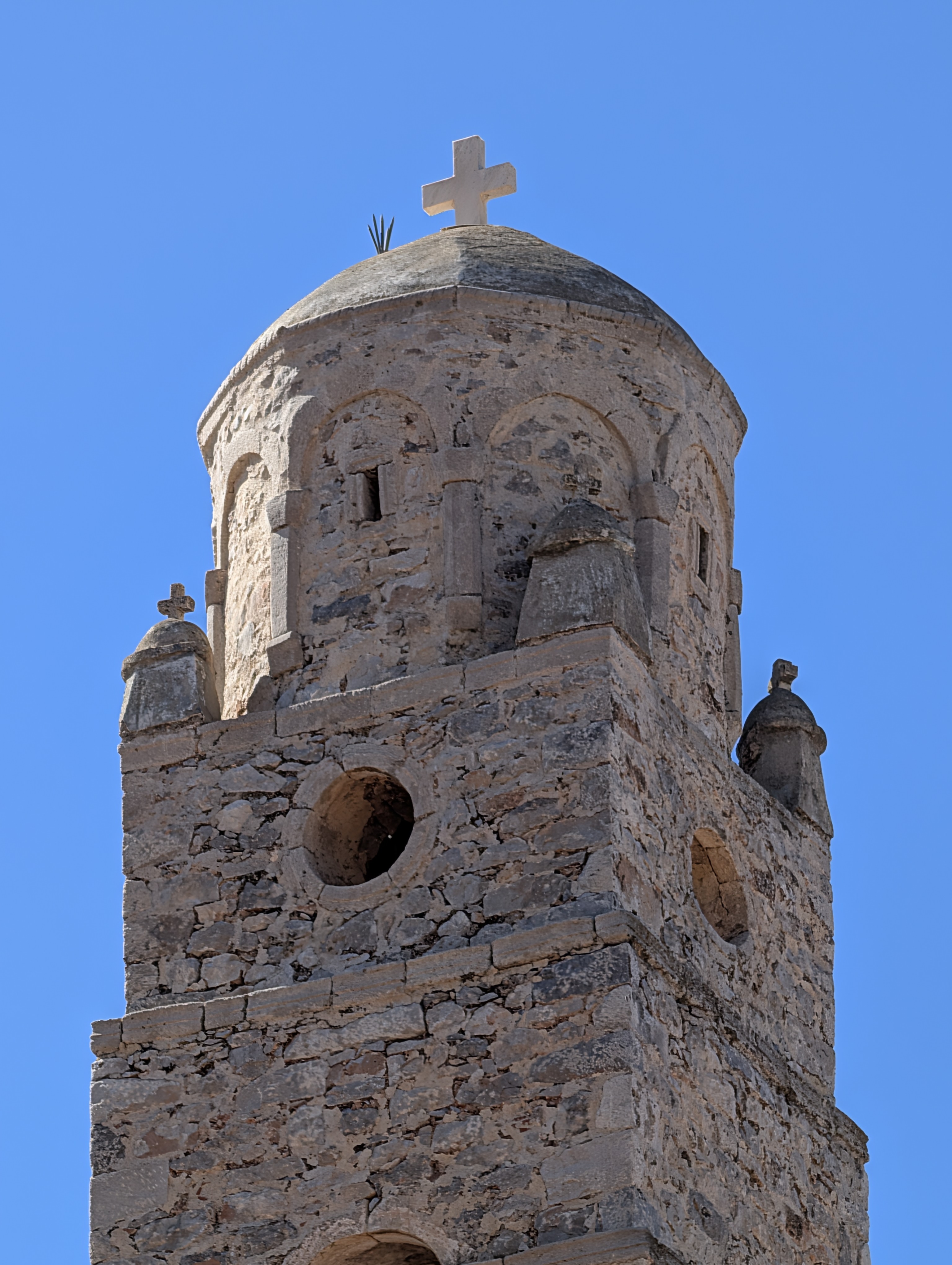
The top of the Archangels bell tower.
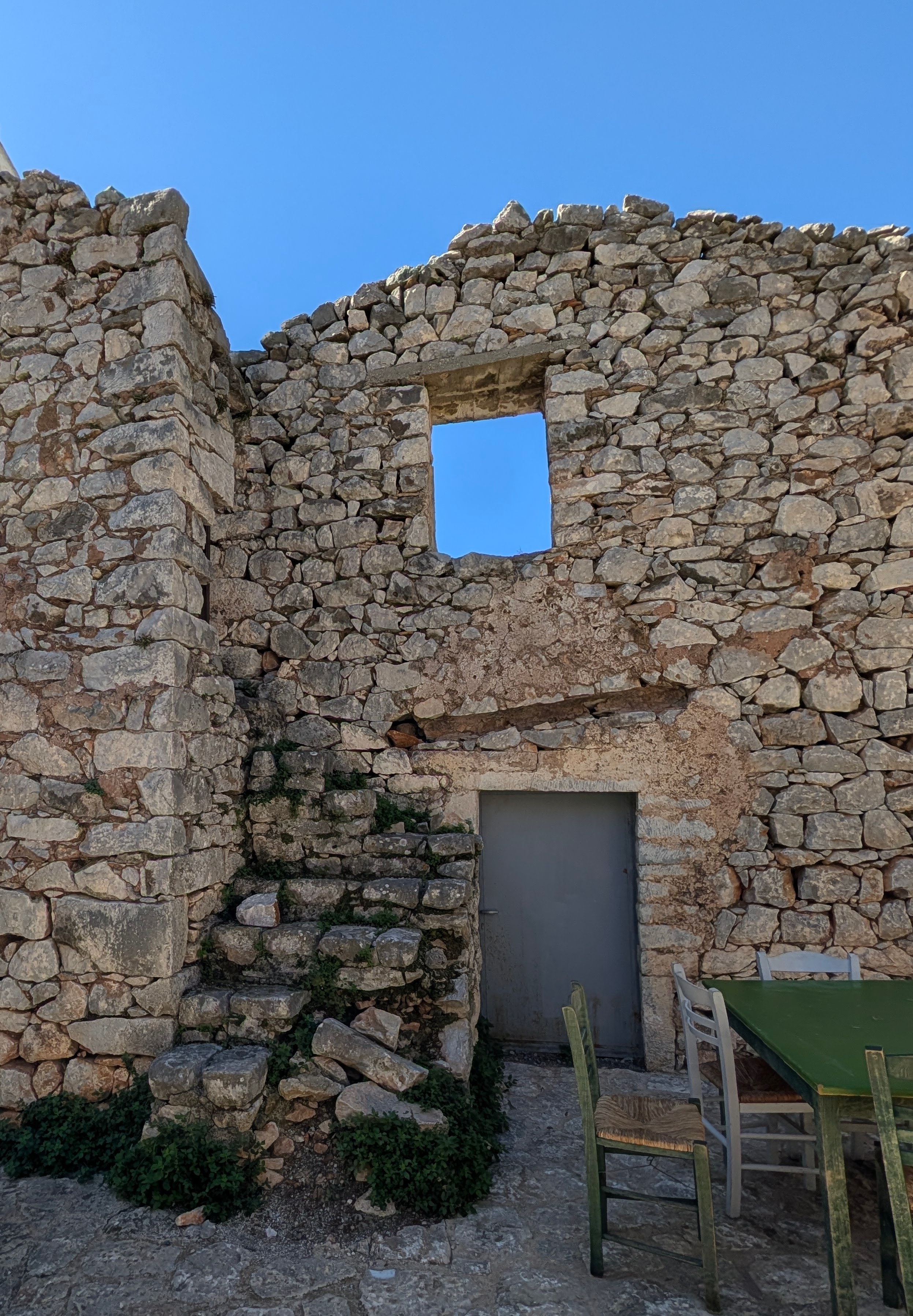
Areopolis has enjoyed a tourist boom in recent years, and the old houses are being saved and restored at a speed I once thought impossible. This one, in an alley, is where many of the restorations begin, and provides a hint of the difficulties involved.
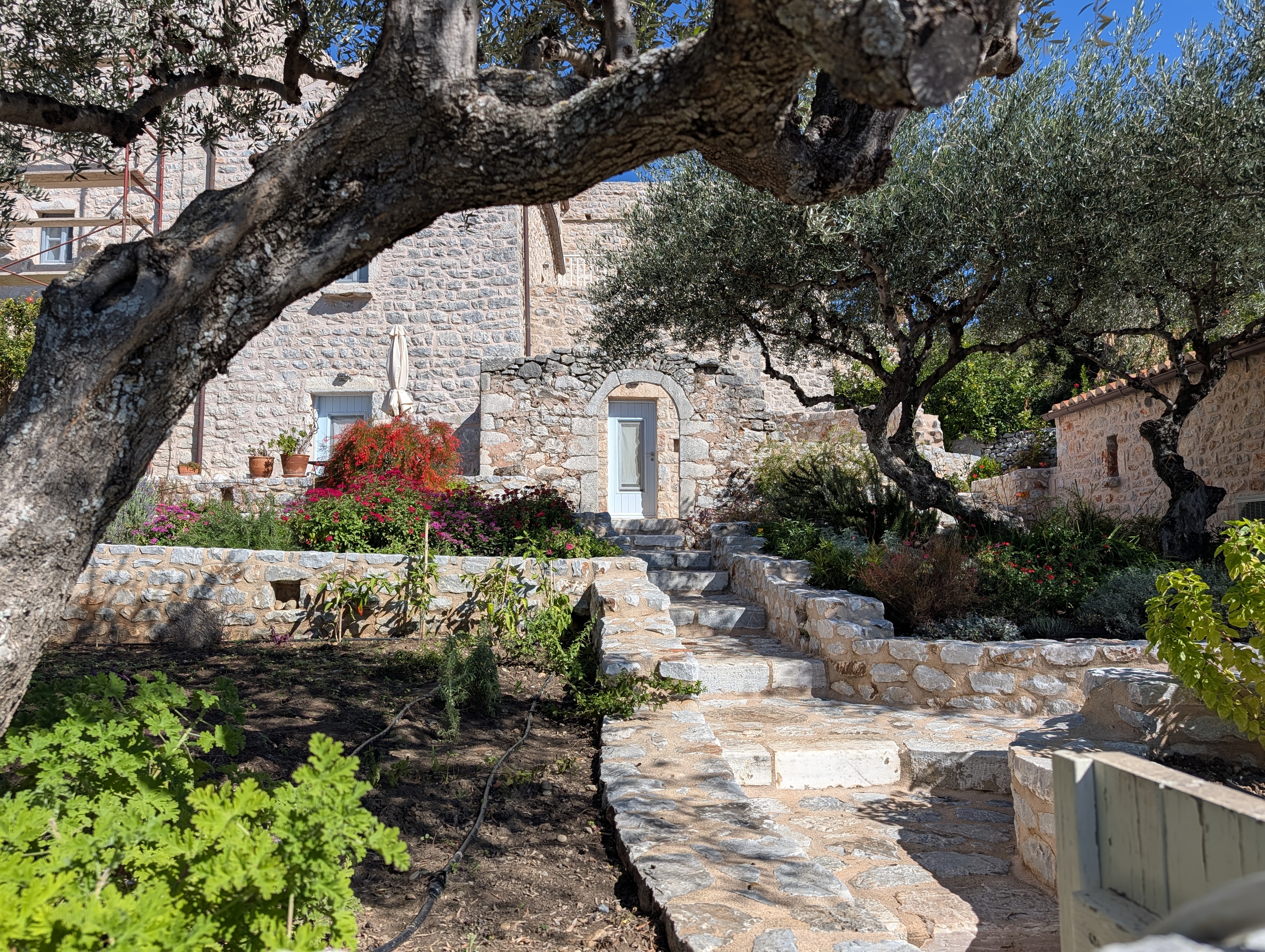
This place, once my favorite hotel in the world, was lovingly, brilliantly, and faithfully restored perhaps a dozen years ago from a falling-down family compound. It is now the private vacation home of a family overseas.
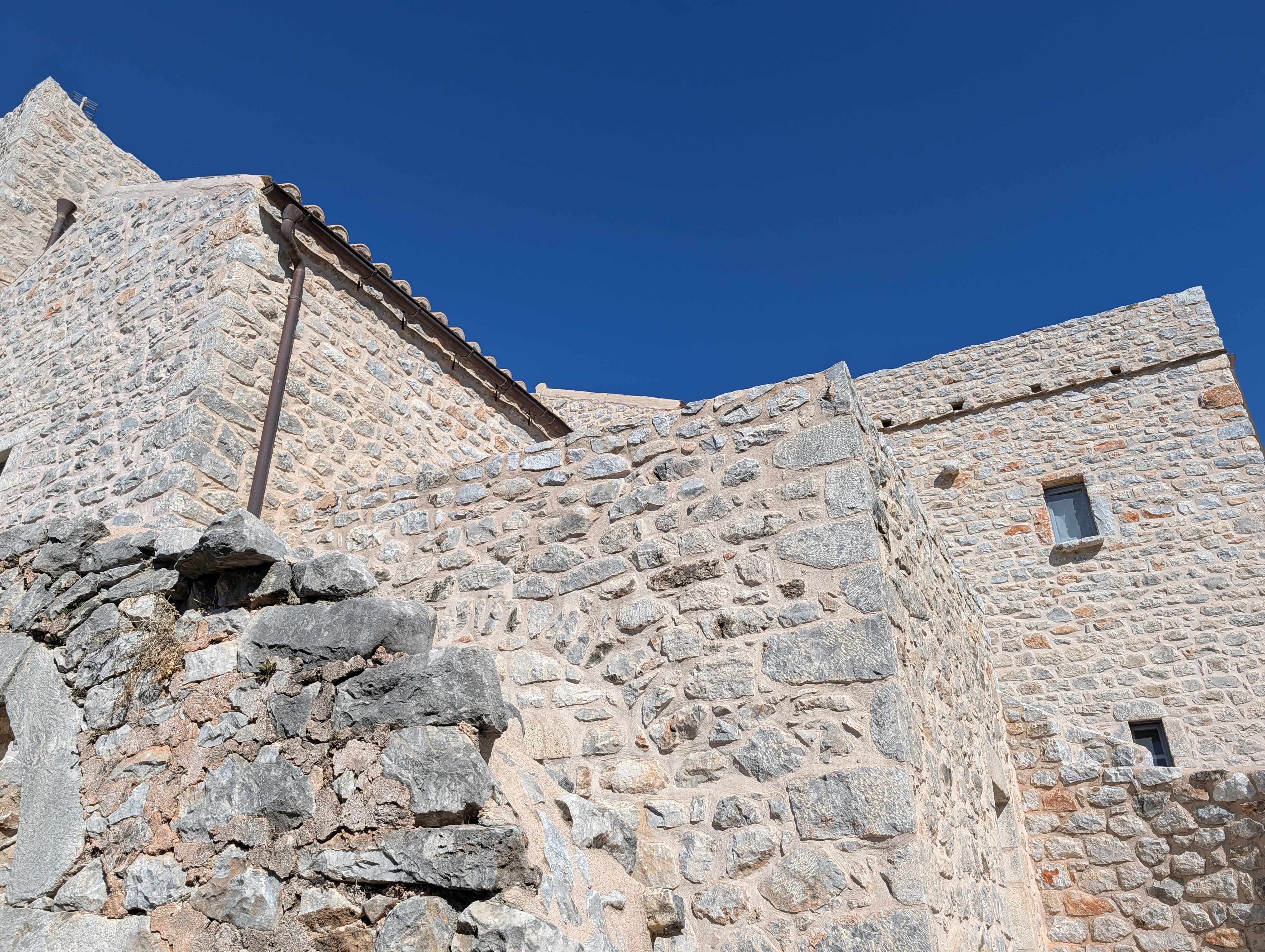
Details of the main building’s walls.
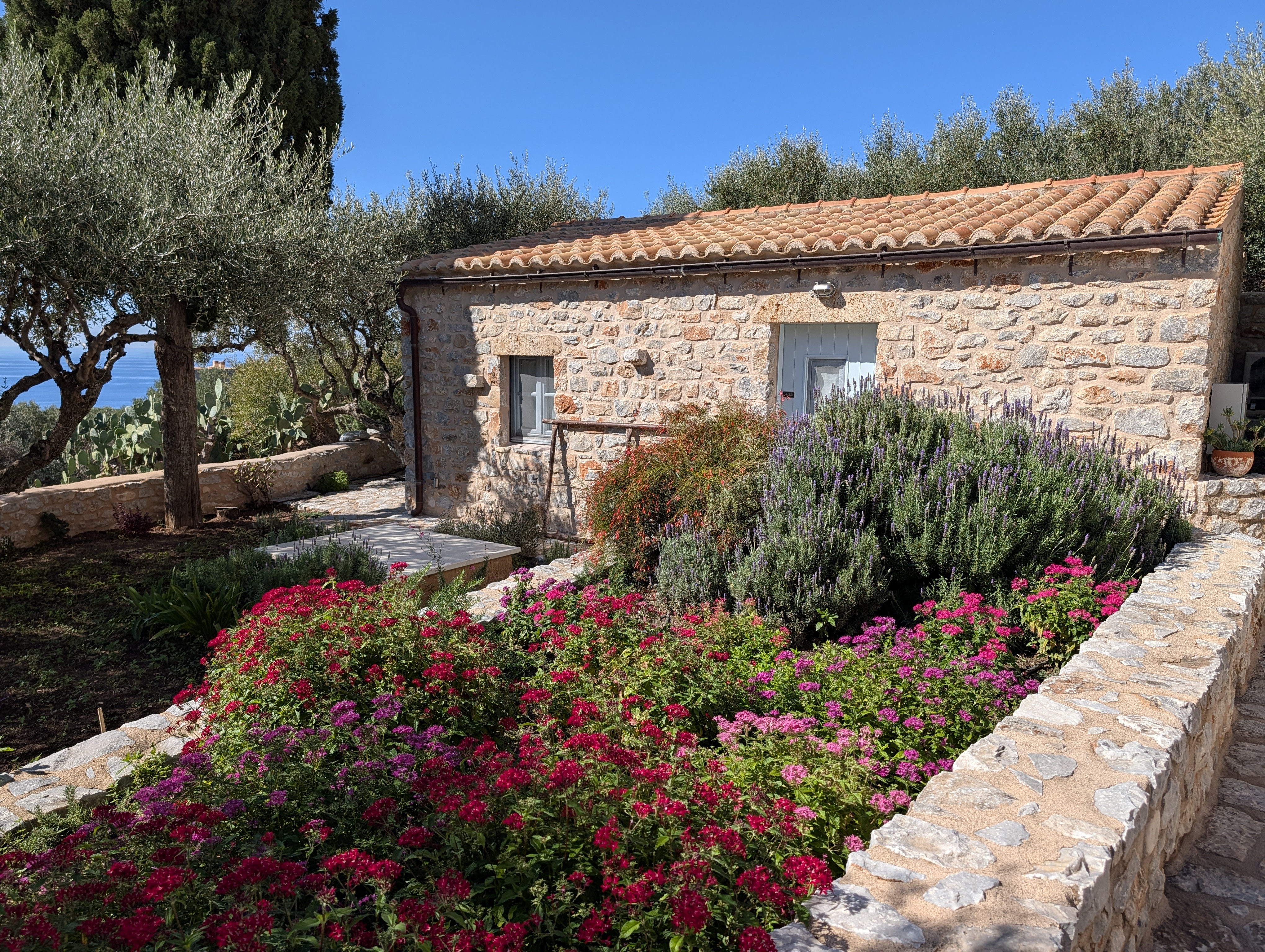
Garden and one of the out-buildings of the compound. We spent many happy, idyllic hours here.
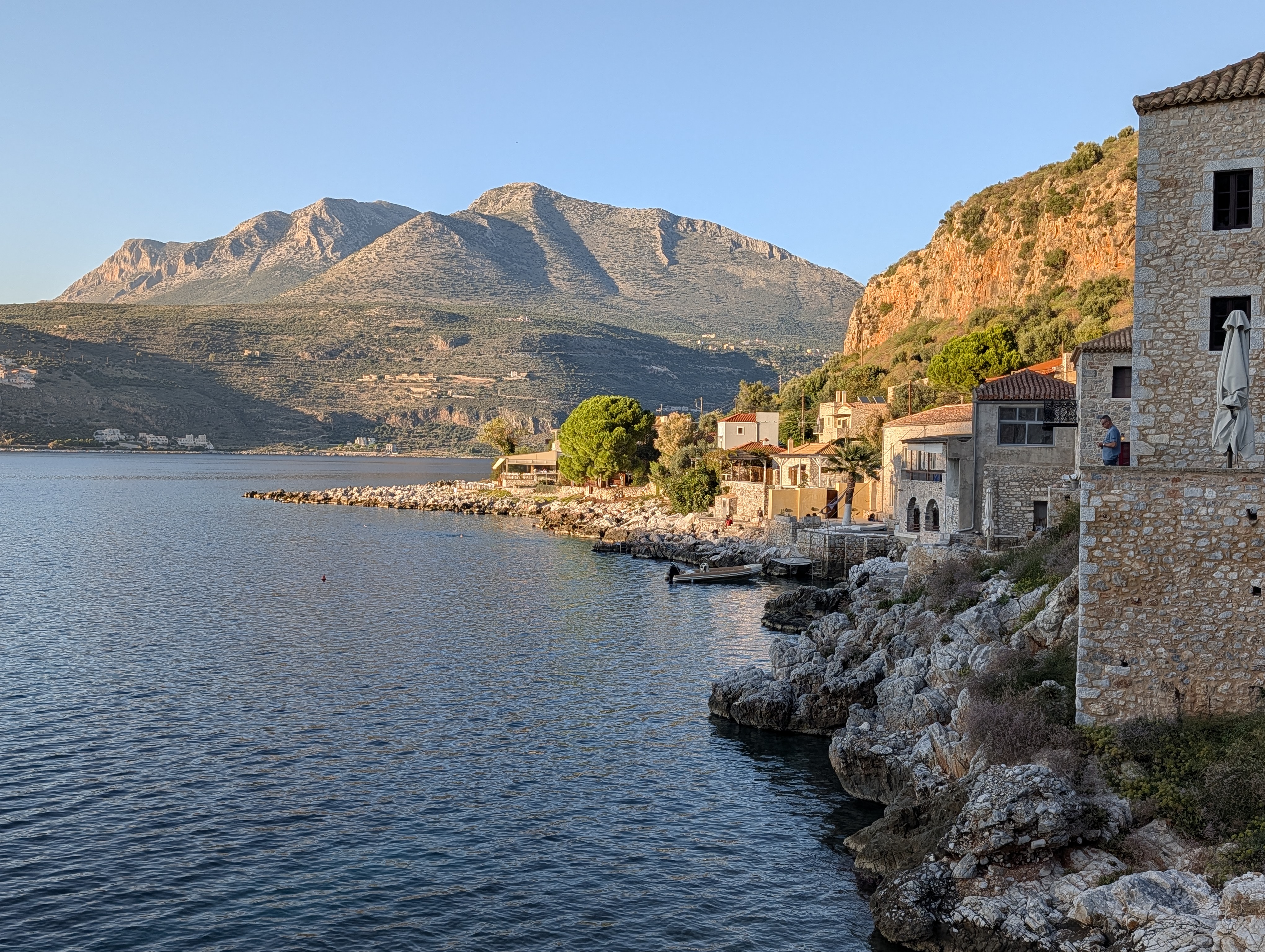
The port of Areopolis is Limeni, a village now consisting largely of hotels, bars, and restaurants.
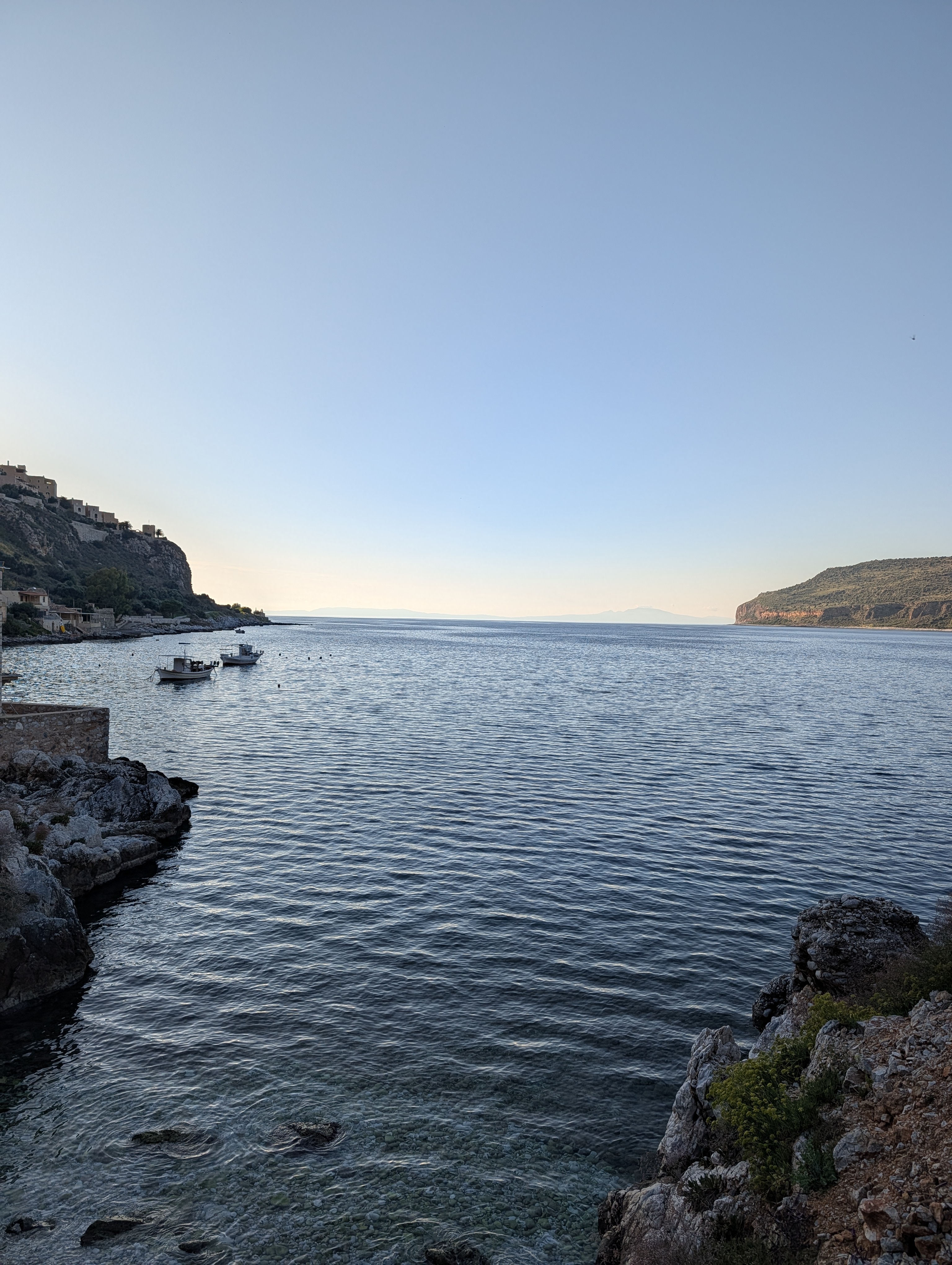
The port is on Limeni Bay, which opens onto the Gulf of Messinia.
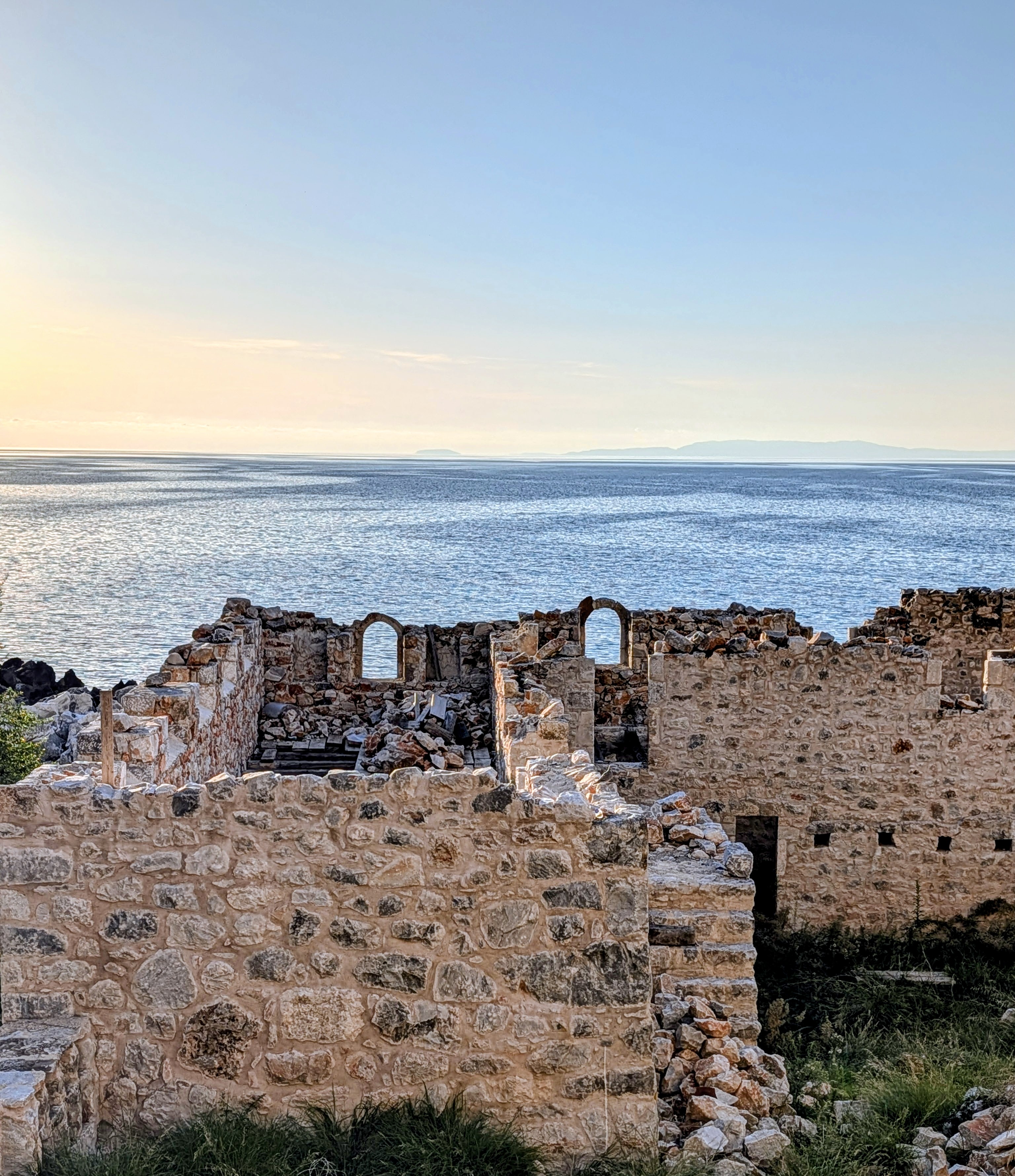
Ruins of a monastery overlooking Limeni Bay.
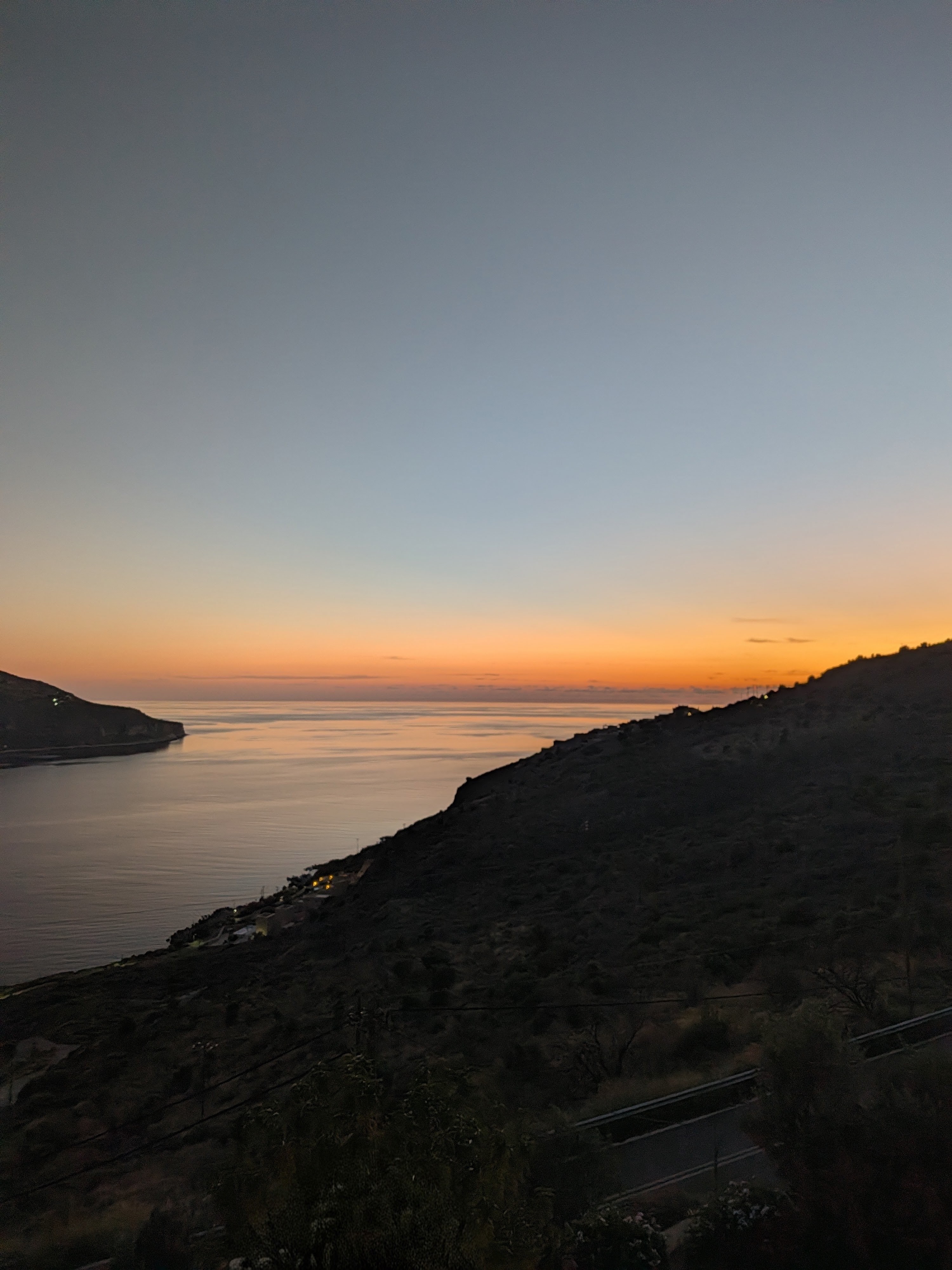
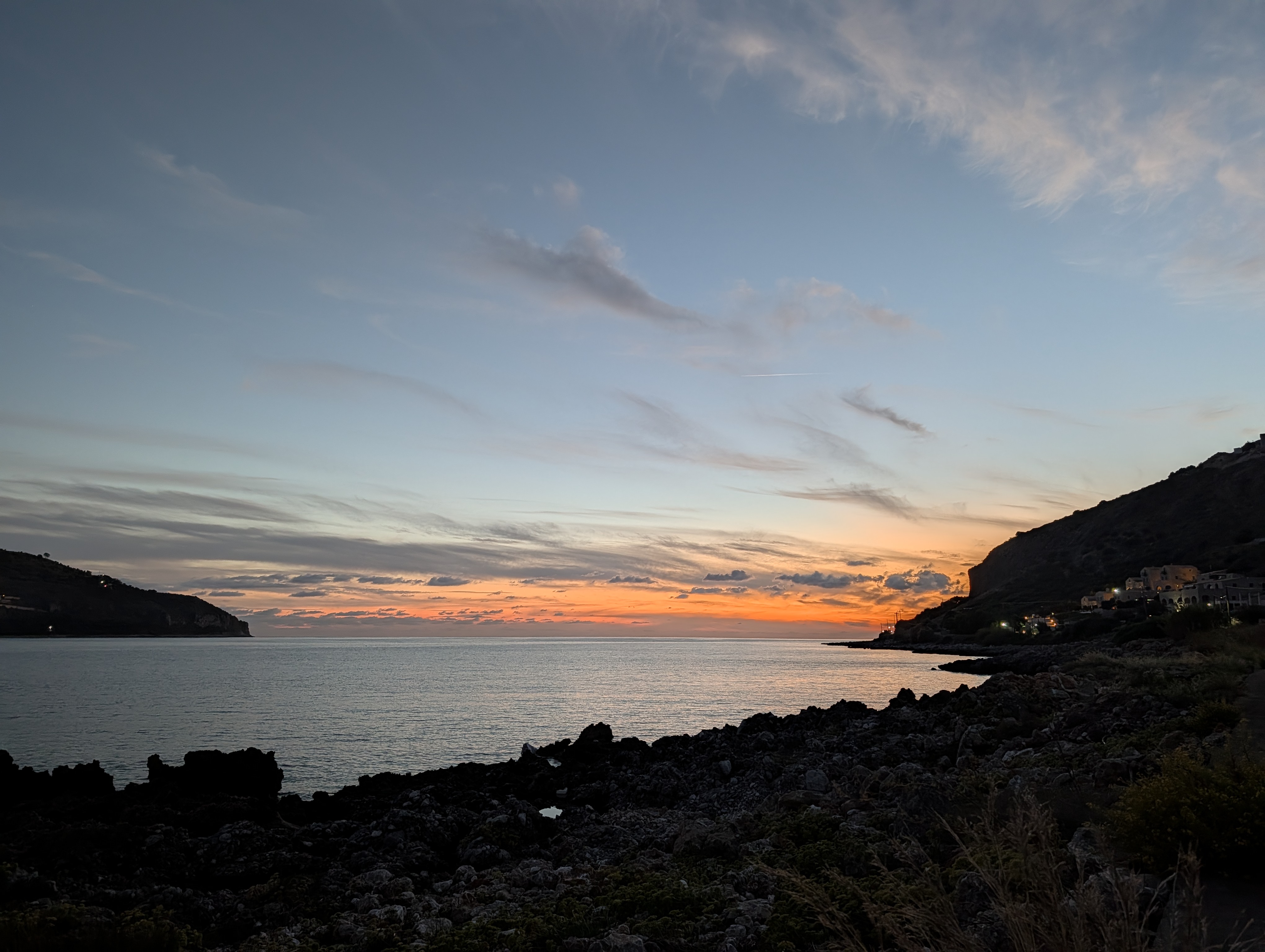
Two nice sunsets over the mouth of Limeni Bay.
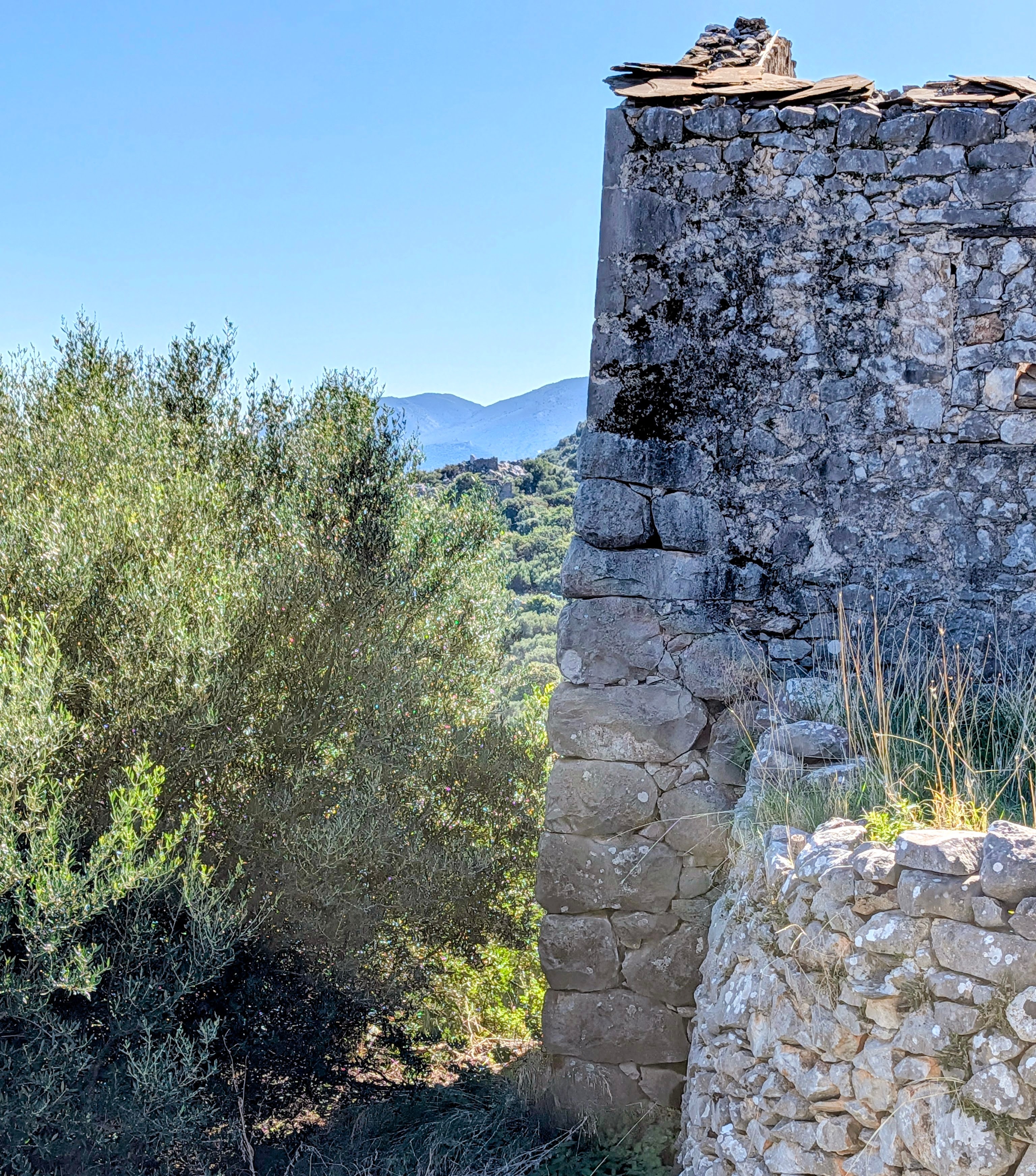
We had time to drive south in Mani for a quick look at the far southern reaches of mainland Greece. I was impressed by the size of the stones at the bottom of this wall.
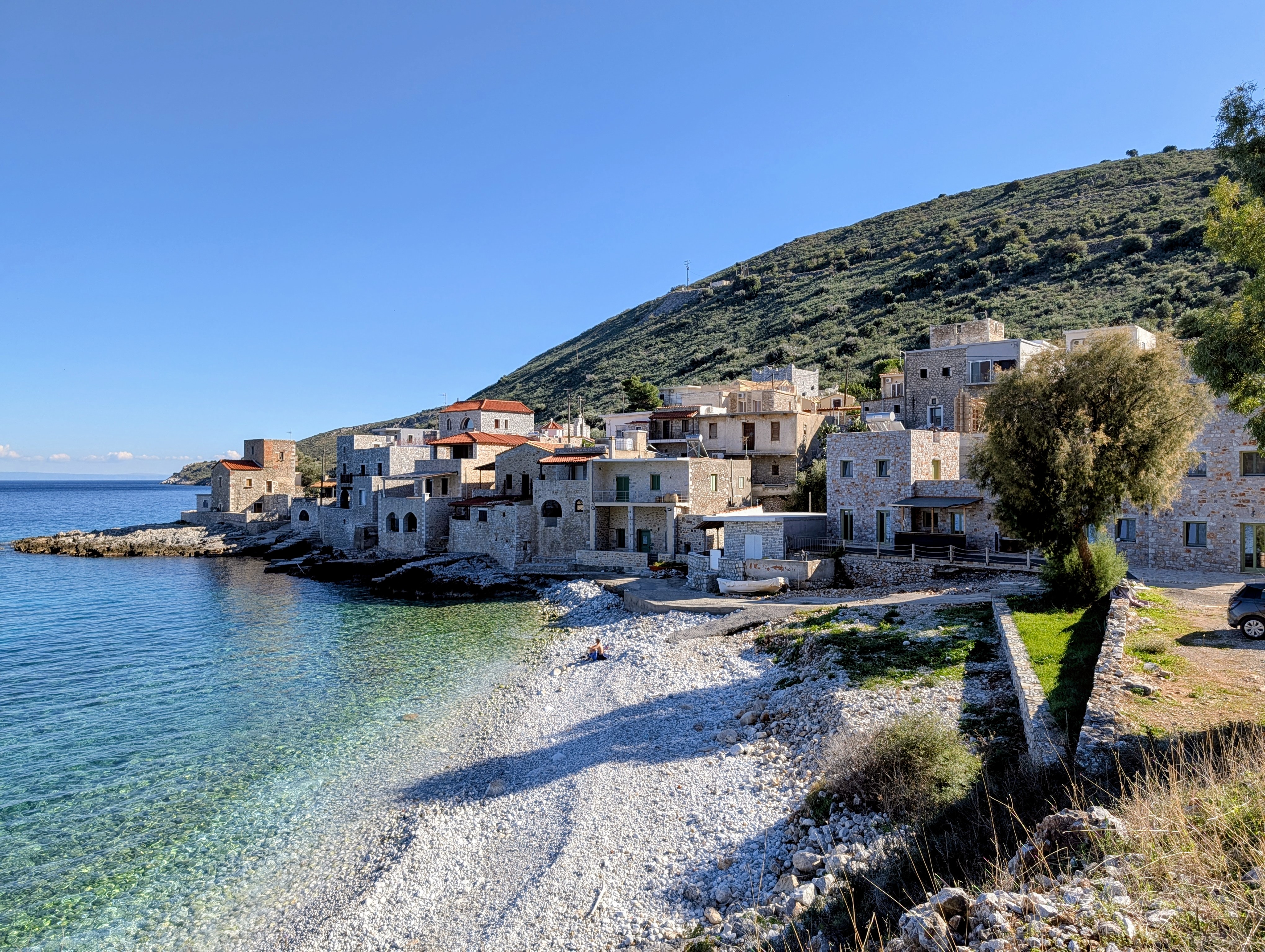
Down south, we also visited a small seaside village that is dear to us, St. Cyprian.
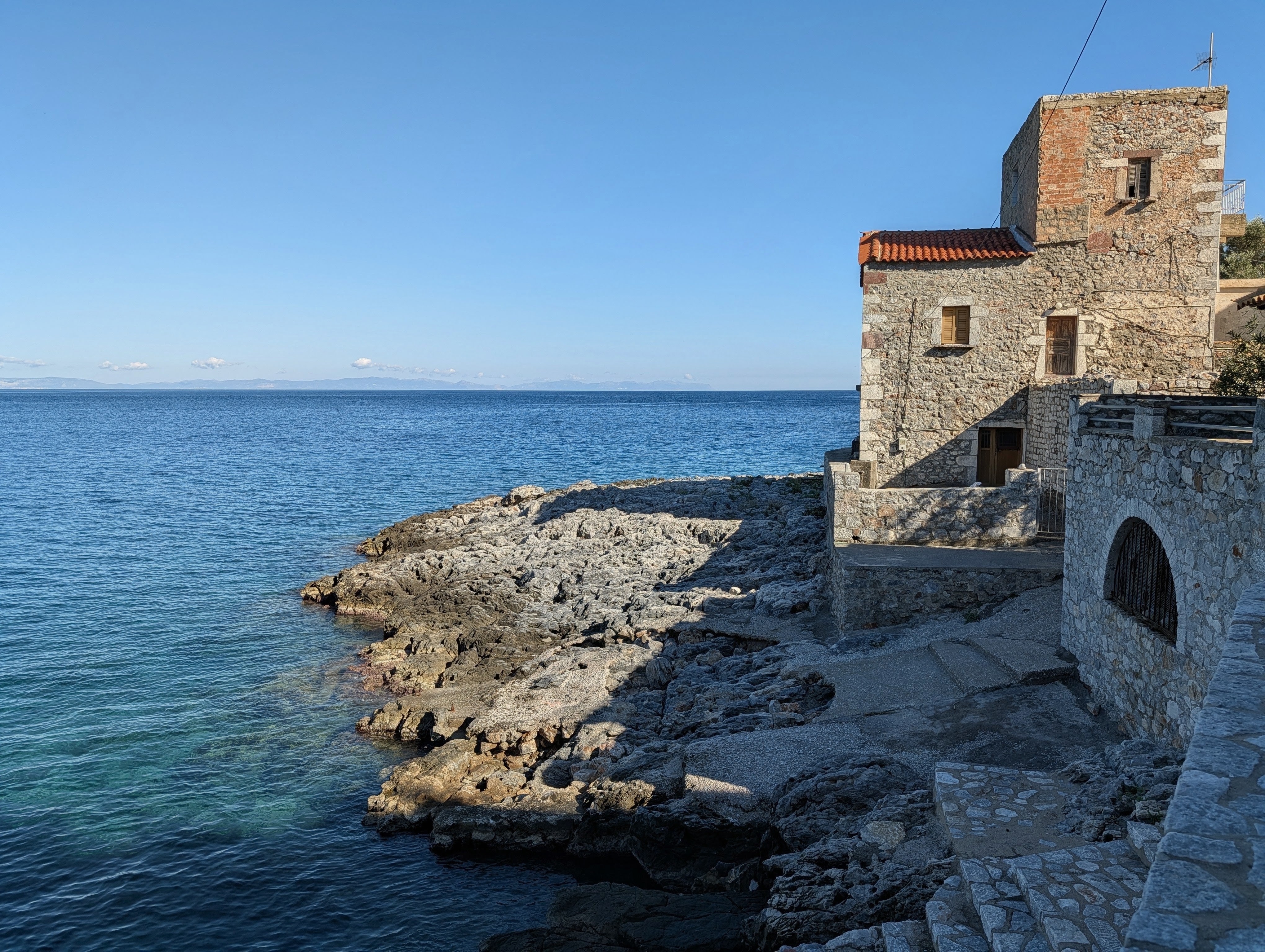
The far eastern end of St. Cyprian. At one time, the larger building housed the offices of a mining company that extracted marble from the mountains above. The cut stone was brought down the mountain to this seafront, where it was loaded onto barges for transfer to larger vessels in the deeper water just offshore.
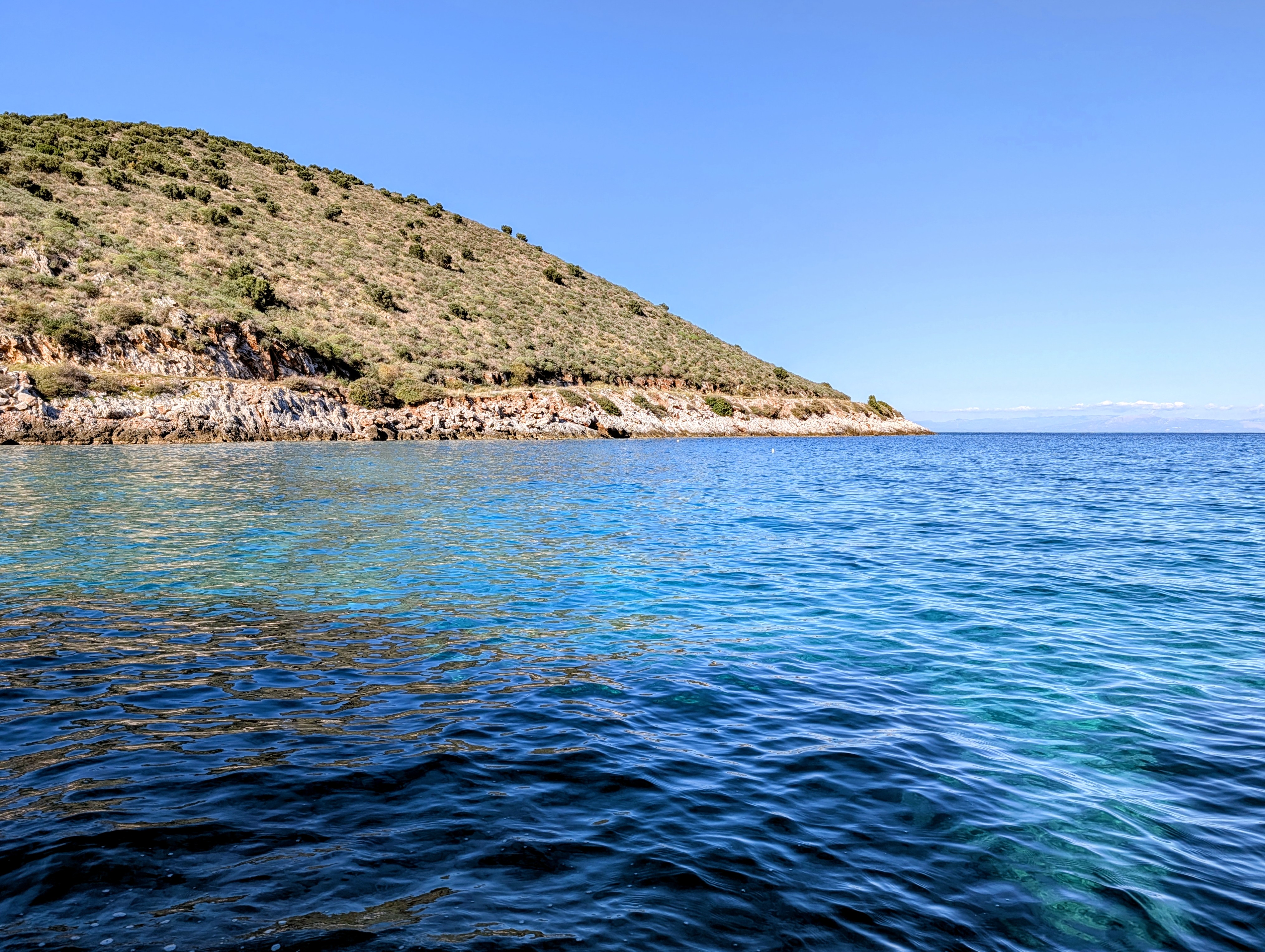
The small bay of St. Cyprian, where the mining company’s boats were loaded with stone. It is said that the red marble mined from the mountain above was used in St. Peter’s basilica in Rome.
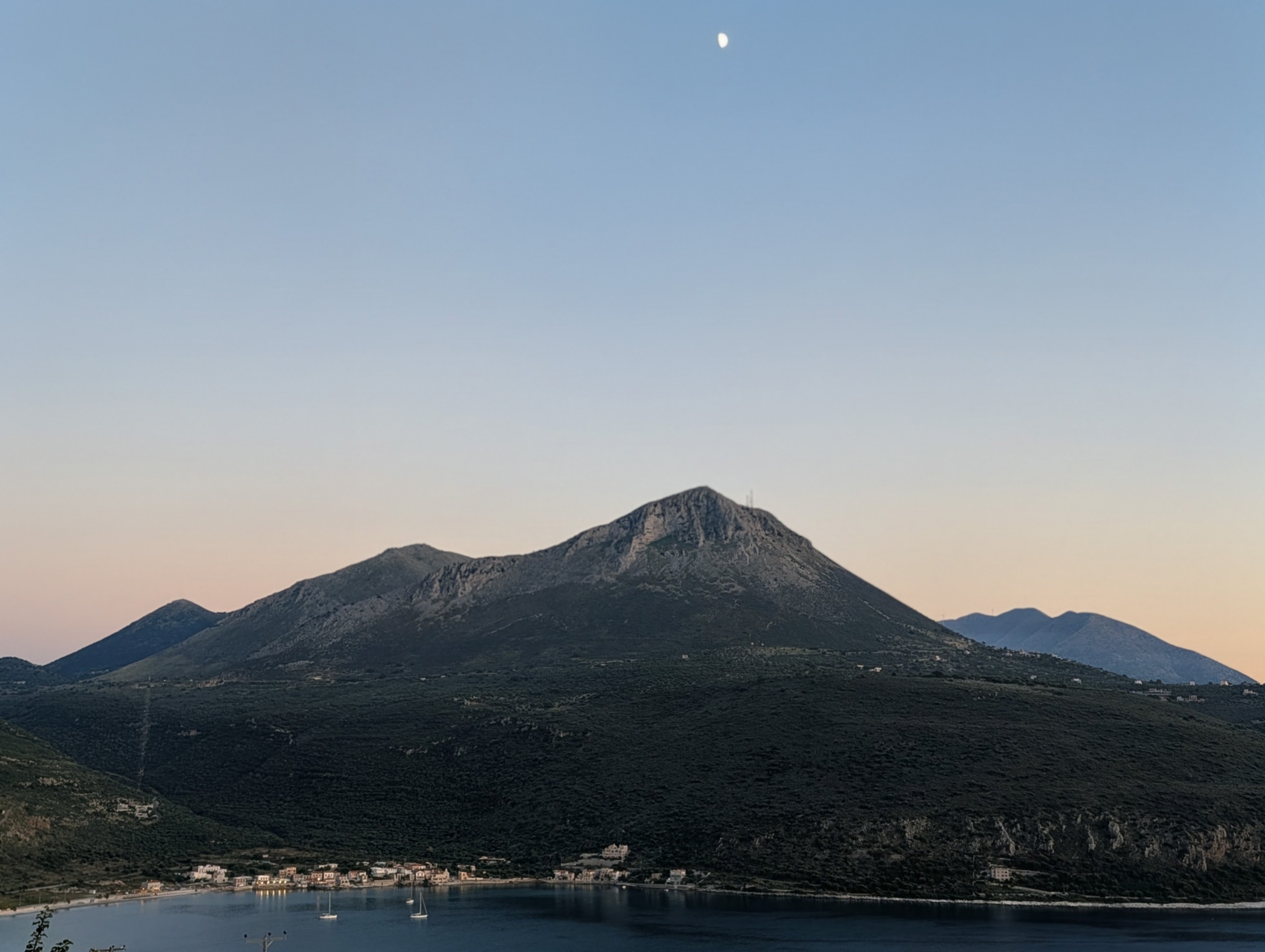
A final look at Prophet Ilias with the moon rising overhead.

